

Mobile Development/Public Sector/QA/Software Development
Digital Visa Application and Verification Platform
Mobile and web platform for vehicle service and ownership management
View projectMany companies already use multiple software systems. The challenge is how those systems work together and how much operational work still happens outside them.
Orders, approvals, and handoffs between departments move through shared spreadsheets, inboxes, and phone calls. Every step depends on someone remembering to do it. Errors surface late, cycle times grow, and the company cannot handle more volume without hiring in proportion.
ERP, CRM, billing, and warehouse tools each hold part of the picture, so staff re-enter the same records in several places. Reports take days to assemble and still disagree with each other. Leadership makes decisions on numbers nobody fully trusts.
Clients and partners want to place orders, check status, and manage accounts online or in a mobile app. The current back office cannot expose that data securely or in real time. Deals where convenience decides go to competitors that already offer self-service.
A previous engagement with digital transformation consultants produced a roadmap and a list of initiatives, but implementation responsibilities remained undefined. The next need is to connect the strategy with an executable engineering plan and working software.
Our digital transformation services cover both the decisions and the engineering behind them. The scope and sequence of work are defined according to business priority, technical dependencies, and the current system environment.
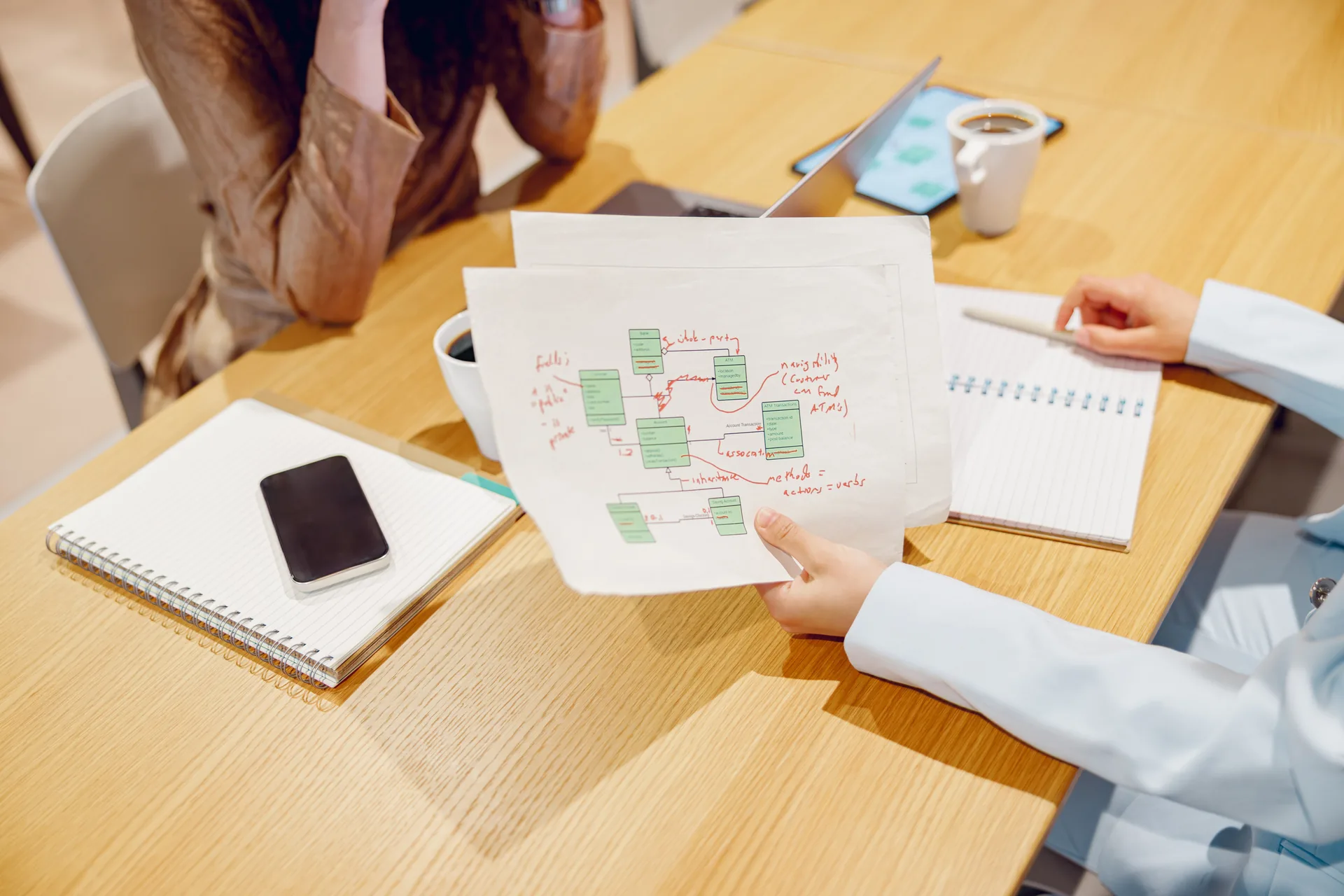
Through digital transformation strategy consulting, we map current processes, systems, and data flows, then rank initiatives by business impact, cost, and risk.

Replacing manual steps, spreadsheets, and email approvals with workflows built into software.
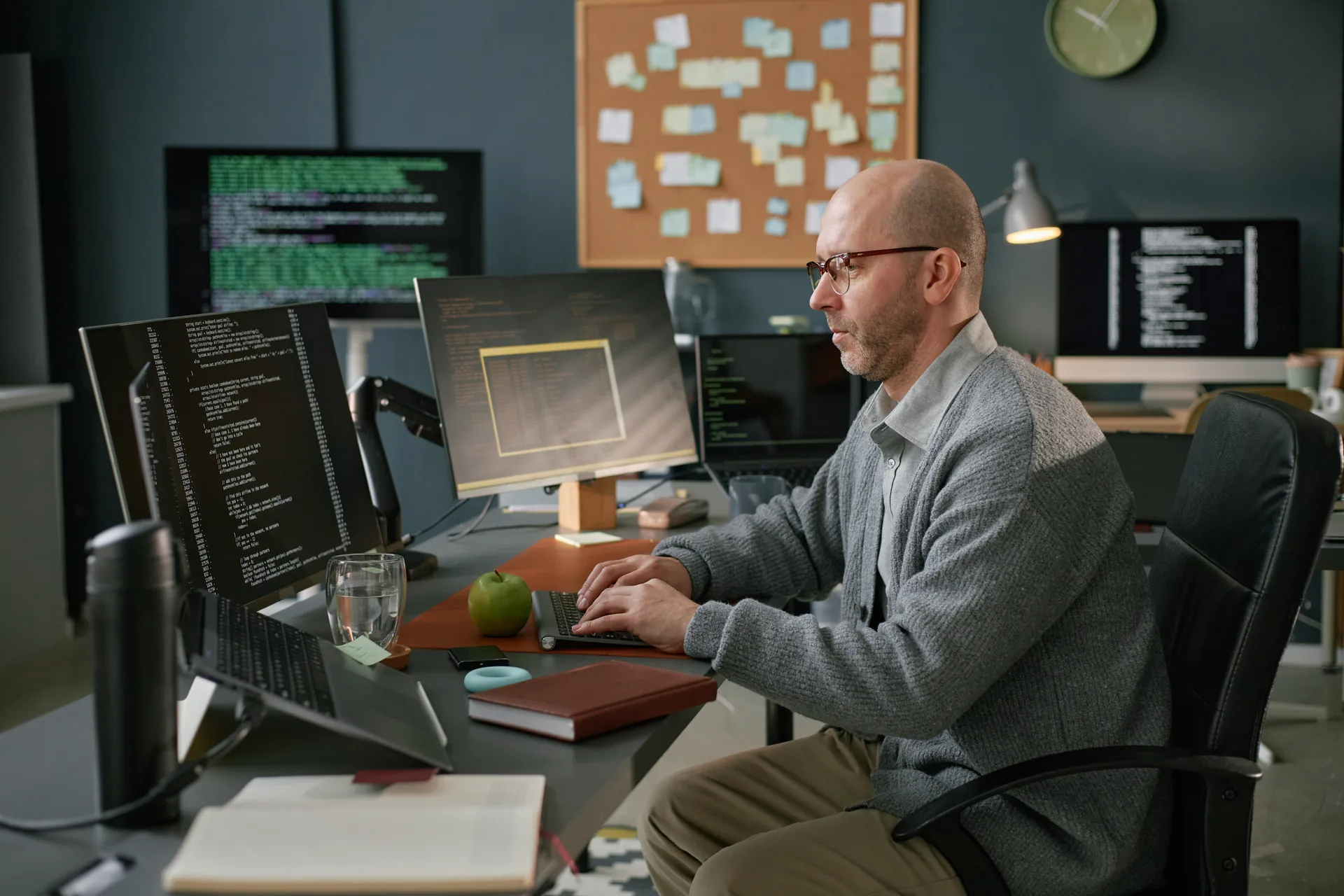
Connecting ERP, CRM, finance, and operational tools through APIs, so data is entered once and reused where it is needed.

Web and mobile applications that give clients, partners, and field staff direct access to orders, accounts, and services.

Consolidating data from operational systems into one reliable source for reporting and, where justified, AI and machine learning use cases.

Updating or replacing core applications that block the rest of the program, in stages that keep operations running.
The problem
Transformation programs can stall between the roadmap and implementation
Deciding what to change is rarely the hardest part. Most programs slow down when plans meet existing systems, daily operations, and limited engineering capacity.
Strategy and engineering often sit with different parties. Digital transformation consulting firms may focus on recommendations while implementation is handled by another team. When these responsibilities are separated, requirements can change meaning between documents, and technical constraints may become visible only after budgets are approved.
Existing systems limit what can be done and in what order. Core applications may be outdated, integrations undocumented, and data inconsistent across departments. A new customer portal or dashboard is only as reliable as the data and back-end systems behind it.
Internal IT is often already focused on keeping operations running. A parallel transformation program therefore requires additional delivery capacity, while the people who use the current tools every day also need to be involved in designing the new ones. Software introduced without sufficient process input may be bypassed in favor of established workflows.
Solbeg's approach
One team responsible for assessment, planning, and implementation
Solbeg assigns architects and engineers to the assessment so technical feasibility is considered alongside business priorities from the beginning. For organizations evaluating a digital transformation company, this connects recommendations with a realistic view of implementation effort, dependencies, and technical risk.
In enterprise digital transformation, the order of work matters as much as the work itself. We start with an audit of systems, integrations, and data quality, then sequence the roadmap so integration and data groundwork come before customer-facing features. Legacy components that block progress are modernized in stages while the business keeps operating.
Solbeg provides the engineering capacity for the program, so your IT team can stay focused on operations. Process owners and end users take part in requirements and pilots, and new software is released department by department. Each group switches to the new tools once they cover its daily work.
Companies often engage Solbeg for digital transformation consulting when a specific business event requires changes that the current systems cannot absorb efficiently.
Two ERPs, two customer databases, and two sets of processes produce duplicate work and conflicting reports. The integration plan has to decide which systems stay, how data migrates, and how both companies operate during the transition. Without that plan, temporary workarounds tend to become permanent.
Systems built for one-time product sales do not handle subscriptions, usage tracking, or recurring billing. Customer records, contracts, and invoicing need a different structure. The new line needs software support from launch, not after the first billing errors.
The migration is unavoidable and has a deadline. Moving the old processes to a new platform unchanged carries the old inefficiencies along with them. The forced change is a practical moment to redesign the processes that the platform supports.
Technicians, inspectors, or drivers fill in paper forms that are retyped in the office days later. Here digitalization consulting starts with the basics: mobile forms, photo capture, offline work, and automatic sync with back-office systems. The office gets the data the same day, and retyping disappears.
Auditors, regulators, or enterprise clients ask who changed a record, when, and on what basis. Manual records and email approvals cannot prove that reliably. Workflows with built-in audit trails and retention rules make the answer available on request.
AI initiatives are on the agenda, yet the data they need is spread across systems, inconsistent, and partly manual. Models trained on that data produce unreliable output. The program starts with consolidating and cleaning data, then moves to use cases with measurable value.

Our digital transformation consulting services are delivered by a mixed team whose composition changes across assessment and delivery phases.
Business analysts
Interview process owners, document current workflows, measure manual effort, and turn findings into requirements engineers can estimate. They also define the metrics each initiative is measured against.
Solution architects
Define the target architecture, integration patterns, and the order in which systems change. They decide which existing digital transformation solutions to integrate, which to modernize, and which to replace.
Backend engineers
Build APIs, integration services, and the business logic that replaces manual steps, using .NET, Node.js, Java, Python, and PHP.
Frontend engineers
Develop internal tools, operational dashboards, and customer and partner portals in React, Angular, and Vue.
Mobile engineers
Create apps for field staff and customers in Swift, Objective-C, Kotlin, Flutter, and React Native, including offline work and sync with back-office systems.
Data engineers
Build pipelines that consolidate data from operational systems, set data quality rules, and prepare the reporting layer and groundwork for AI use cases.
QA engineers
Test new software and the connections between old and new systems during transition, including regression checks on processes that must keep working.
Delivery manager
Enterprise digital transformation services involve several departments at once, so the delivery manager plans releases with operational teams, tracks scope and budget across workstreams, and reports progress to business and IT stakeholders.
When choosing a digital transformation company, the deciding question is whether the partner can connect the roadmap with implementation. Solbeg combines advisory and engineering capabilities within the same delivery organization.
Recommendations are backed by engineering
Solbeg brings 30+ years of engineering to every assessment. For teams evaluating a digital transformation consultancy, recommendations can be checked for technical feasibility before they reach the roadmap. This provides a more realistic basis for implementation scope, dependencies, and budget planning.
Web, mobile, data, cloud, and modernization can stay within one engagement
Solbeg covers web and mobile development, back-end engineering, data engineering, AI and machine learning, cloud-based software solutions, and legacy application modernization. A program that touches several of these areas does not need a separate engineering context for every workstream, reducing handoffs and coordination effort.
Change can be introduced without stopping operations
Solbeg’s legacy modernization practice works in phases aligned with business priorities. Core systems are updated or replaced step by step while the business keeps running on them. This avoids making a single high-risk cutover the default approach for a multi-phase program.
Teams can stay involved across the full program
Transformation runs over several phases, and Solbeg works as a long-term engineering partner through dedicated teams. As a digital transformation service provider, we can keep core engineers on the program so product and process knowledge carries from one phase to the next.
Experience spans different industries and product types
Solbeg has completed 500+ projects in 10+ industries, and its products serve 100M+ end users. Patterns in logistics, finance, B2B operations, and other domains can help shorten assessment and inform architecture and implementation decisions.
Most solutions for digital transformation combine both approaches. The choice is made process by process, depending on how standard the process is and how much it differentiates the business.
Each stage ends with a result the business can review before committing budget to the next one.
Discovery and current-state audit
Solbeg’s business analysts and architects interview department heads, process owners, and IT stakeholders, and review systems, integrations, and data quality. Manual effort and bottlenecks are documented with figures where they exist.
Result: a current-state map and a prioritized list of problems.
Roadmap and business case
Initiatives are ranked by impact, cost, risk, and dependencies, and the target architecture is defined. Your leadership approves the sequence and the metrics each initiative must improve.
Result: a phased roadmap with scope and budget estimates for each phase.
Pilot on one process
The first initiative is delivered for one process or department and measured against the agreed metrics. Process owners and end users test it in daily work.
Result: working software in production and a validated approach for the next phases.
Phased delivery
Integration, data, and application work proceeds according to the roadmap, with releases planned together with operational teams. Priorities are reviewed between phases as business conditions change.
Result: a series of releases, each replacing a specific manual process or disconnected tool.
Rollout and transition
Users move from old tools to new software department by department, and outdated systems are retired once nothing depends on them.
Result: new processes in daily use and a reduced number of legacy tools.
Transformation runs alongside daily operations, so Solbeg teams join your existing processes instead of running a separate delivery model.
Real products our team has designed, developed, and launched together with clients, from idea to release.
Mobile Development/Public Sector/QA/Software Development
Mobile and web platform for vehicle service and ownership management
View project
Healthcare/Online Scheduling/Public Sector/Retail/Web Development
Online booking system for appointments and reservations
View project
Retail/Web Development
3D web tool for designing rooms and selecting furniture
View projectNo. A focused assessment, closer to digital transformation advisory than a full strategy project, is enough to choose the first initiative. Multi-year plans written up front tend to go out of date. A pilot on one process produces evidence for the decisions that follow.
Yes, replacement is not the default. In many cases, connecting the existing system through APIs and automating the processes around it delivers results faster. Replacement is considered when a system blocks key processes or its vendor ends support.
It depends on the number of processes, the state of existing systems, and how many departments are involved.
Each initiative has metrics agreed during the roadmap stage, such as cycle time, hours of manual work, error rates, or adoption by users. They are measured before the change to set a baseline and again after release. Decisions about the next phase are based on these figures.
Successful delivery typically requires support from a senior stakeholder who can help resolve business-priority and budget decisions, regular input from process owners, and a technical contact familiar with the existing systems. Process owners know where the real workarounds are, and their input shapes requirements. Decisions on priorities and budget stay with your leadership.
Start with whether the company can build what it recommends. When comparing digital transformation consulting companies, ask for examples of integration with legacy systems and how the vendor handles the transition from old tools to new ones. Also clarify who owns the code and documentation once the engagement ends.
End-to-end services to build, launch, and grow your digital product.