

Ecommerce/Web Development
Ecommerce Web Portal
Ecommerce platform for selling and managing premium wear
View projectMost companies that start a cloud consulting conversation are not at the beginning of their cloud journey. Workloads are already running, budgets are already committed, and the questions are about direction, cost, consistency, and control rather than whether cloud should be used at all.
The monthly bill increases, but it is difficult to identify which product, team, environment, or workload is responsible for the change. Finance needs forecasts while engineering can often provide only aggregate totals. Optimization efforts then become difficult to measure because there is no agreed cost baseline or ownership model.
Some workloads have moved while others remain in the data center, and the two environments now depend on each other. The company pays for and operates both, often with different tooling, access models, deployment processes, and support practices. Each dependency between the environments adds operational complexity.
Product teams may have selected services and patterns independently, so networking, identity, secrets management, deployment, and monitoring work differently across the estate. Engineers moving between teams have to learn a new operating model each time, and improvements made in one area are difficult to reuse elsewhere.
Audit and customer security reviews ask about data residency, access controls, retention, logging, backup, and recovery. If responsibility is distributed across infrastructure, development, security, and legal teams without a defined owner, the answers have to be reconstructed for each review.
Solbeg delivers cloud consulting services as engineering work that results in architecture decisions, operational documentation, and an implementation roadmap. The outputs are designed to remain usable whether implementation continues with Solbeg or is handled by the client’s own team.

Inventory of applications, dependencies, data flows, infrastructure, operational requirements, and relevant constraints. Workloads can then be classified according to the path that fits them, including retaining, retiring, rehosting, re-platforming, or refactoring where appropriate.
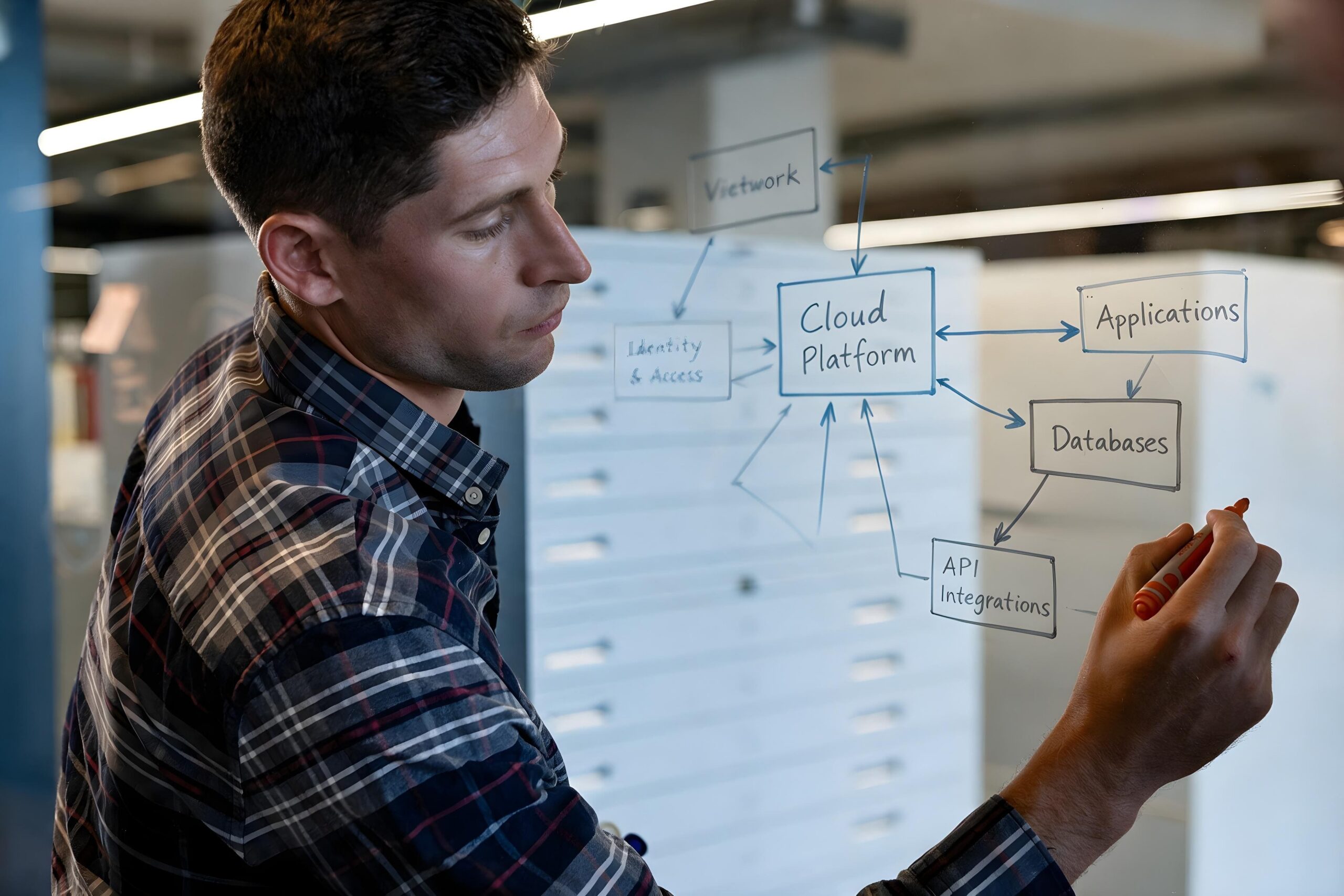
Definition of network topology, identity and access patterns, environment separation, connectivity, and integration principles for the target environment. Architecture decisions are documented together with the constraints and alternatives considered.
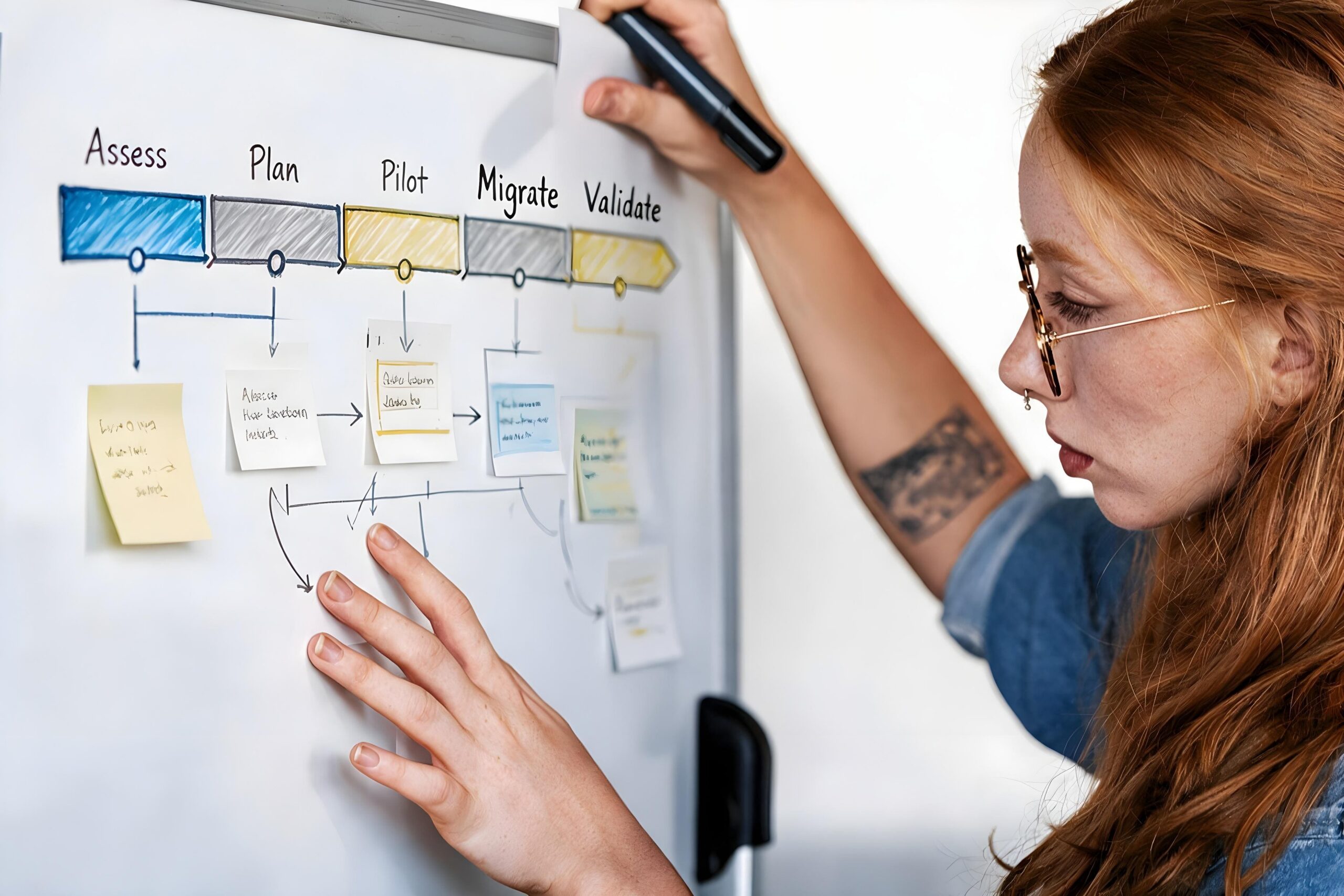
Cloud strategy and planning consulting that sequences workloads according to dependencies, business priorities, risk, and available delivery capacity. The roadmap identifies which systems need to move together and which can remain in place until later stages.

Comparison of current and projected operating costs at workload level, together with tagging, budgeting, and reporting requirements. Commitment and reserved-capacity options can be evaluated against expected utilization rather than selected before the workload profile is understood.

Review of access management, secrets handling, logging, backup, recovery, network controls, and relevant data requirements against the policies and regulatory constraints that apply to the environment.

Cloud advisory services covering ownership boundaries, environment provisioning, operational responsibilities, escalation, support, documentation, and the knowledge required by the team that will operate the platform after implementation.
The problem
Planning competes with delivery inside the same group of people
The engineers best placed to define a future cloud architecture are often the same people responsible for keeping current systems available and delivering the product roadmap. Assessment and architecture work then happen between incidents and releases, which makes it difficult to complete a coherent current-state view and target plan within a predictable timeframe.
Decisions can also accumulate project by project. One team selects a managed service for a particular need, another chooses a different pattern for something similar, and each decision can make sense independently. Across the full estate, however, this can create several approaches to networking, identity, deployment, monitoring, and cost management.
Reference architectures alone do not resolve these issues. Real environments contain application dependencies, licensing constraints, data residency requirements, third-party integrations, operational commitments, and software that may not be designed for cloud infrastructure. Cloud computing consulting needs to account for those constraints if the resulting architecture is going to be practical for the delivery team.
Solbeg's approach
An external engineering view built around your systems and constraints
Solbeg can assign engineers specifically to the assessment so the current-state inventory, dependency mapping, and workload analysis are treated as a defined delivery scope rather than work completed between operational tasks. Your internal team provides system knowledge and validates findings without having to carry the entire documentation workload. Cloud strategy consulting is structured around agreed deliverables and review points.
Shared standards are then defined where consistency is useful. Networking, identity, environment separation, deployment, security, and observability principles can be established across the estate while allowing justified differences for individual workloads. Architecture decisions are documented together with their reasoning so future teams can understand why a particular pattern was selected.
Constraints are identified before the target architecture and migration sequence are finalized. Application limitations, data location requirements, integration contracts, licensing, operational dependencies, and business deadlines all affect which workloads should move and in what order. This is an important part of enterprise cloud consulting because migration sequencing has to reflect the actual system landscape rather than only technical preference.
Cloud advisory work concludes with agreed artifacts such as the current-state inventory, target architecture, architecture decisions, cost assumptions, identified risks, and a sequenced roadmap. Solbeg can continue into implementation, while the outputs also remain usable by the client’s engineering team as part of the agreed delivery model.
Companies often involve an external cloud consultancy when the decision carries a deadline, a significant cost, or architectural consequences that will be difficult to reverse later. The engagement can help clarify the appropriate direction before major implementation decisions are finalized.
A lease expiry, hardware refresh, or support deadline creates a date that cannot easily move. The main questions become which workloads should migrate, which should be retired or replaced, which require application changes, and how dependencies affect the sequence.
Procurement, resilience, existing vendor relationships, technical capabilities, and internal skills can point in different directions. Cloud strategy consultancy at this stage compares the options against the organization’s actual workloads, operating model, and constraints rather than treating single-cloud or multi-cloud as a universal preference.
Two organizations may bring different accounts, identity systems, naming conventions, security baselines, network structures, and billing arrangements. Consolidation starts with understanding both estates and deciding what should be unified, what should remain separate, and how dependencies affect the sequence.
Expansion into another jurisdiction can change where certain information is stored or processed, who is allowed to access it, and what evidence must be available. The architecture may need regional separation, additional controls, or changes to existing deployment patterns.
Software that has historically been deployed separately for each customer may need tenancy boundaries, shared operational tooling, access isolation, deployment standards, and a clearer view of infrastructure cost per customer before the model can scale.
Leadership or finance may require more than a technical estimate before approving a multi-year program. The assessment can provide workload assumptions, projected cost drivers, dependencies, risks, and staged investment requirements in a format that supports both engineering and budget discussions.
An internal architecture proposal may already exist while implementation has not yet started. Because Solbeg combines advisory and engineering capabilities, the engagement can include assessing the proposed architecture against expected workloads, operational effort, dependencies, security requirements, and projected cost, refining the target approach, and implementing the selected option where required.

IT cloud consulting services at Solbeg can involve several engineering and advisory disciplines. Team composition depends on the scope, existing environment, and decisions the engagement is expected to produce.
Cloud assessment
Inventory of applications, dependencies, data volumes, integration points, licensing considerations, current infrastructure, and available operating-cost information. Workloads are analyzed according to possible future paths such as retaining, retiring, rehosting, re-platforming, or refactoring.
Cloud architecture
Definition of target account and environment structures, network topology, identity and access patterns, connectivity, and integration between cloud and any systems that remain outside it. Architecture decisions are documented with their constraints and alternatives.
Infrastructure engineering
Implementation of reference environments, infrastructure-as-code foundations, or other agreed technical validation needed to confirm that architecture assumptions work in practice.
Security and access
Definition or review of identity, permissions, secrets and key management, logging, network boundaries, and other relevant controls. Existing gaps can be identified alongside requirements that need to be addressed during implementation.
Data architecture and migration planning
Planning of data movement, replication, storage, backup, recovery, and cutover requirements, including systems where downtime or data gravity affects the possible migration sequence.
Cloud cost modeling
Comparison of current and projected operating costs at workload level, together with recommendations for tagging, budgeting, reporting, and cost visibility. Commitment or reserved-capacity options can be modeled against expected usage where relevant.
Delivery and roadmap coordination
Dependency mapping, delivery sequencing, risk tracking, checkpoints, and coordination between the specialists involved in the assessment and the client’s internal owners.
Documentation and knowledge transfer
Runbooks, architecture documentation, decision records, and working sessions that prepare the client’s engineers to understand and operate the target environment. Cloud IT consulting deliverables are documented so the client’s team can work with them after handover, while Solbeg can continue supporting implementation, optimization, and platform development under the agreed engagement model.
Solbeg works across cloud software development, modernization, data, QA, and infrastructure-related engineering. Cloud advisory therefore considers the target infrastructure together with the applications and delivery processes that have to operate on it.
Recommendations are checked against implementation effort
Architecture options can be reviewed by engineers familiar with the application and infrastructure work required to implement them. When companies compare cloud consulting companies, an important distinction is whether the proposed architecture is assessed together with the engineering effort required to put it into practice.
Application constraints are part of the assessment
Cloud architecture can depend on how applications manage state, data access, integrations, sessions, deployment, and external dependencies. Reviewing these factors helps identify application changes that may otherwise remain invisible in an infrastructure-only migration plan.
The engagement can continue into implementation
If Solbeg continues into delivery, the architecture and assessment context remain with the engineering team responsible for implementation, helping preserve continuity between planning and execution. Because Solbeg combines advisory and engineering capabilities, a cloud consulting company engagement can naturally extend into implementation, optimization, and ongoing platform development under the agreed delivery model.
Deliverables remain usable after the engagement
Inventories, architecture decisions, cost models, risks, and roadmaps are prepared as working documents for technical and business stakeholders rather than only as presentation material. Cloud computing consulting companies can differ in what is handed over, so deliverable ownership and level of detail are defined as part of the scope.
Experience across different system types
Solbeg’s engineering work includes modern and long-lived applications with different architecture, integration, and operational constraints. This allows cloud planning to consider systems that cannot simply be redesigned around an idealized target architecture.
Scope is defined before work starts
Cloud strategy consulting services are structured around agreed deliverables, responsibilities, and review points so both sides know which questions the engagement is intended to answer.
Migration strategy is usually decided workload by workload rather than once for the entire estate. Some systems benefit from moving with minimal application change, while others justify architectural changes during migration. The appropriate choice depends on deadlines, application lifecycle, available engineering capacity, cost drivers, and operational goals.
A cloud assessment starts by defining the decision that needs to be made and concludes with architecture and roadmap artifacts that can support implementation. The exact depth of each stage depends on the agreed scope.
Scoping conversation
We review the current environment, the decision the organization needs to make, relevant deadlines, and the areas that should be included in the assessment. The result is an agreed scope, stakeholder list, and deliverable set before detailed work begins.
Discovery and current state
Solbeg engineers work with the relevant infrastructure, development, security, finance, and other stakeholders to document workloads, dependencies, infrastructure, current operating practices, and available cost information. Access requirements and documentation gaps are identified during this stage.
Options and target architecture
Architecture options are developed and reviewed against technical constraints, operational effort, cost considerations, security requirements, and delivery timing. Important decisions are documented together with the alternatives and trade-offs considered.
Roadmap, cost model, and risks
Workloads are sequenced according to dependencies and business priorities, expected cost drivers are modeled where the required information is available, and identified risks are documented with their assumptions and dependencies. The output provides a technical and planning basis for implementation and budget review.
Validation on a pilot workload
Where included in the scope, a representative workload or technical component can be used to validate important architecture assumptions before the wider program relies on them. Findings are incorporated into the target design and roadmap.
Handover
Architecture documentation, decision records, runbooks, risks, and the roadmap are reviewed with the client’s team in working sessions. Outstanding decisions and responsibilities are identified so implementation can continue internally, with Solbeg, or with another delivery team.
A few examples of digital products we’ve built for our clients and the results they brought to their business.
Ecommerce/Web Development
Ecommerce platform for selling and managing premium wear
View project
Media & Entertainment/Web Development
Media portal with cinema listings, news, and interactive content
View project
Finance & Banking/Software Development
SaaS platform for secure distribution of confidential documents
View projectNo. Provider selection can be part of the assessment rather than a prerequisite. Workload characteristics, existing contracts and licenses, data residency requirements, service availability, cost structure, and the skills already available within the organization can all influence the recommendation.
No. A partially migrated environment can itself be the starting point. The review can assess what has already moved, how the new and existing environments interact, which costs and operational issues have appeared, and how the remaining workloads should be sequenced.
The exact deliverables depend on the agreed scope, but they can include a documented current state, dependency inventory, target architecture, architecture decision records, cost assumptions, identified risks, and a sequenced implementation roadmap. These outputs provide a practical foundation for implementation and remain part of the working project context as Solbeg continues into the next delivery stages.
Solbeg can support both advisory and implementation as part of a continuous engagement. The architecture context, decisions, and roadmap developed during consulting can carry directly into implementation, allowing the same engineering organization to continue with migration, platform development, optimization, and ongoing support under the agreed delivery model.
Projected costs can be modeled against the current baseline where sufficient workload and billing data is available, but the result is an estimate rather than a guaranteed saving. Actual cost depends on utilization, architecture decisions, usage growth, pricing, contract terms, and how workloads behave after migration. The assumptions behind the model should therefore remain visible and reviewable.
Internal involvement is usually highest during discovery because the assessment needs access to people who understand the applications, infrastructure, dependencies, costs, and business constraints. Later involvement is more focused on validating findings, reviewing architecture decisions, and confirming roadmap priorities.
Yes. Discovery can use the running environment, configuration, infrastructure definitions, billing information, repositories, and interviews with the people who operate the systems. Missing documentation may increase the amount of discovery work required, and creating an accurate current-state inventory can become one of the assessment deliverables.
End-to-end services to build, launch, and grow your digital product.