

Software Development/Telecom/Web Development
Telecom Billing Platform Optimization
Mobile and web platform for vehicle service and ownership management
View projectCompanies often turn to data analytics services when an existing reporting or data environment starts creating operational problems.
Finance, sales, operations, and other teams may calculate the same metric from different sources or apply different business rules. As a result, reporting becomes inconsistent and discussions focus on which number is correct rather than on what the data means.
A source system may rename a field, change a schema, or stop producing a scheduled export. The failure may remain unnoticed until a dashboard, report, or downstream process starts showing incomplete or incorrect results.
Analysts may spend a significant amount of time exporting spreadsheets, cleaning data manually, rebuilding joins, and preparing recurring datasets instead of interpreting results and supporting business decisions.
Reports that once returned in seconds may take minutes or time out as data volumes increase. Analytical workloads can also begin to compete with production systems for compute and database resources.
CRM, billing, support, marketing, ERP, and other applications may contain overlapping customer, product, or operational records under different identifiers. Without a consistent data model or matching logic, creating a complete and reliable view becomes difficult.
A model, dashboard, or analytics prototype may work on a sample extract but fail to become operational because the production data supply, monitoring, ownership, access model, or refresh process has not been defined.
Organizations may lack a clear record of who can access which datasets, how sensitive information should be handled, or how long records must be retained. This can turn audit, privacy, and compliance requests into manual investigations.
Our data and analytics services can cover the full path from source systems to business consumption, including ingestion, storage architecture, transformation, data quality, modeling, and delivery to analytical tools or downstream applications as part of broader custom software development initiatives. Work can begin with an environment that needs stabilization or with a new data platform built from scratch.
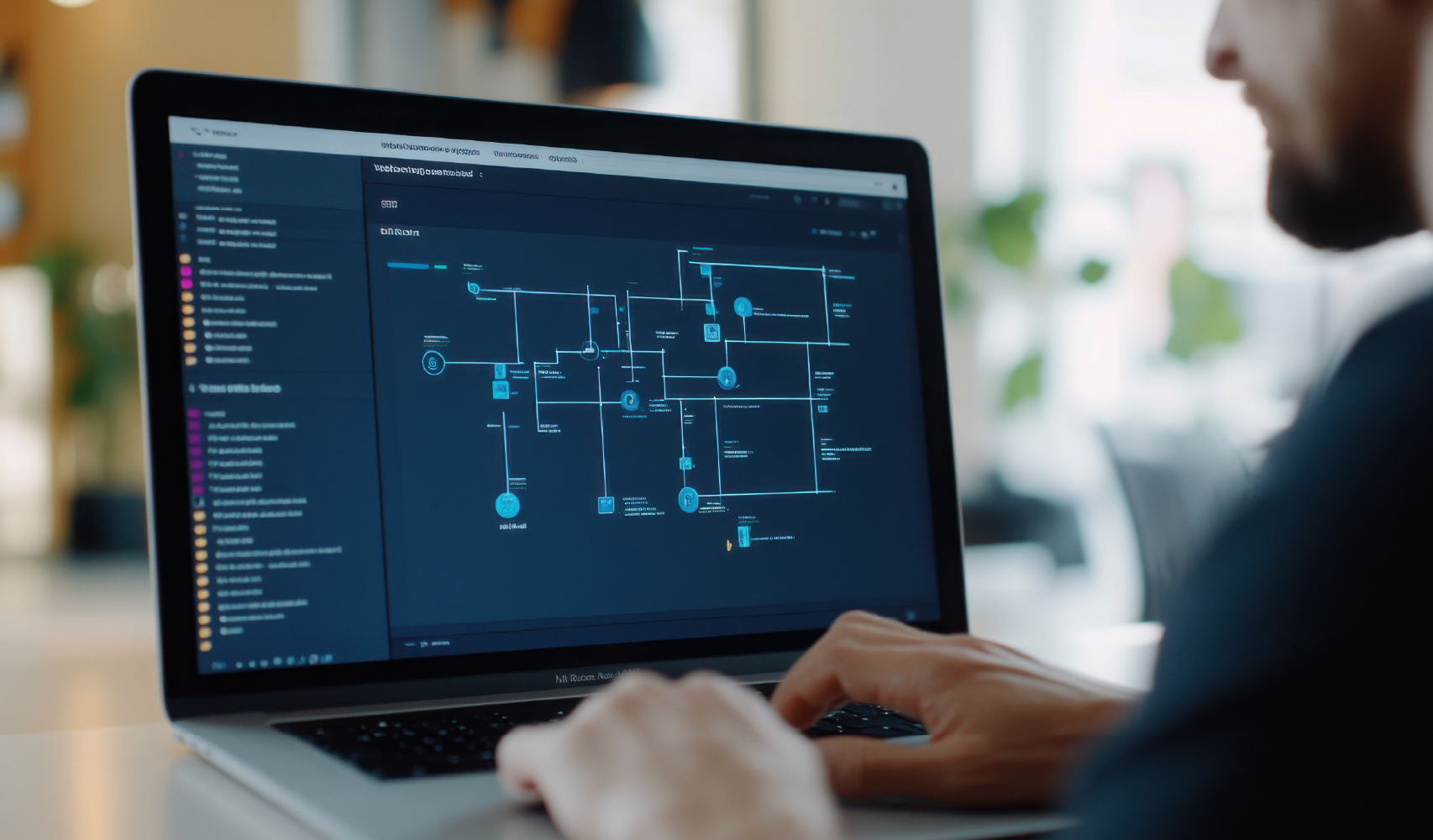
We define ingestion, storage, processing, and serving layers based on data volume, freshness requirements, query patterns, integration constraints, security needs, and the technologies the client’s team can operate effectively.

We build ingestion and transformation pipelines with orchestration, scheduling, dependency management, retry logic, and failure alerting. The goal is to make data delivery observable, repeatable, and recoverable when individual jobs or source systems fail.

We define reusable business entities, relationships, and metric logic so reports and analytical products built on governed models can produce more consistent results. Modeling can also clarify ownership and definitions for key business data.

We can create documented metric and reporting layers over governed analytical models, allowing business users to answer recurring questions through dashboards and self-service analytics without relying on custom extracts for every request.

Data quality work can include validation rules, reconciliation checks, lineage documentation, monitoring, and role-based access controls. These practices can improve traceability from reported metrics back to their underlying sources and transformations.
The problem
Data environments often become difficult to maintain gradually rather than through a single failure. New sources and urgent reporting requirements can introduce one-off scripts, custom extracts, stored procedures, spreadsheet logic, and transformations distributed across multiple tools.
As the environment grows, ownership and business logic may become harder to trace, while processing windows, query performance, and infrastructure cost become increasingly difficult to manage. This is a common point at which organizations start considering big data analytics services or a broader data-platform redesign.
Solbeg’s approach
We can begin by mapping source systems, transformations, consumers, existing pipelines, and business-critical data flows so the current environment is understood before changes are introduced.
Transformation logic can then be consolidated into governed, version-controlled pipelines and analytical models rather than remaining scattered across reporting tools and manual processes. Validation, monitoring, ownership, and alerting can be introduced according to the criticality of each pipeline and dataset.
Capacity planning can use observed workload patterns, SLAs, expected growth, and business priorities to balance performance with infrastructure cost. Documentation and knowledge transfer can be developed throughout delivery to support future maintenance, onboarding, and handover.
Analytical queries may compete with transactional workloads for database resources, causing dashboard usage or large reports to affect application performance. A separate analytical layer can help isolate reporting and production workloads.
Processing windows may be missed, query times may increase, and infrastructure costs may become harder to control. Scaling the existing setup vertically may no longer provide a sustainable or cost-effective solution. At this stage, organizations may need big data engineering services or a broader data-platform redesign rather than another reporting layer alone.
Two or more systems may contain overlapping customer, product, financial, or operational records while the business still needs consolidated reporting. Data engineering can establish matching, transformation, and governance rules while the original systems remain in use.
Daily refreshes may no longer be sufficient for inventory allocation, transaction monitoring, service operations, or other time-sensitive workflows. The platform may need near-real-time or more frequent data delivery depending on business requirements.
A model may perform well in a notebook while the production data needed to operate it is not reproducible, monitored, versioned, or delivered reliably. Data engineering can provide the production-grade pipelines required for training and inference.
Organizations may need to show where data originated, how it was transformed, who accessed it, and how long it is retained. This can require improvements to lineage, access control, monitoring, documentation, and data governance.
Internal engineers may already be focused on maintaining existing systems and have limited capacity for a new platform, migration, or analytics initiative. Data analytics services and solutions can be delivered for a defined scope while the internal team retains ownership of the wider data environment.

Depending on project scope, data engineering services can involve some of the following roles and responsibilities.
Data architect
Architecture work can define the target platform, storage patterns, integration approach, data flows, environments, and standards that guide pipeline and analytical development.
Data engineers
Data engineering can include ingestion, transformation, orchestration, schema evolution, incremental processing, reliability improvements, and optimization for data volume, performance, or infrastructure cost.
Analytics engineers
Analytics engineering can turn raw or transformed data into documented, reusable, and tested business models with consistent definitions for use in BI, reporting, and downstream analytics.
BI developers
Business intelligence work can include dashboards, reports, semantic or metric layers, usability improvements, access controls, and collaboration with business stakeholders on definitions and reporting requirements.
DataOps engineers
Data platform and DevOps responsibilities can include environments, CI/CD, deployment automation, monitoring, backups, access controls, reliability, and visibility into infrastructure usage and cost.
Quality assurance engineers
QA can include validation and reconciliation testing, verification of transformation logic against source systems, failure-handling checks, and confirmation that monitoring and alerting behave as expected.
Delivery manager
Delivery management can coordinate priorities, backlog, dependencies, status reporting, stakeholder communication, and collaboration between Solbeg specialists and the client’s internal teams.
Solbeg combines data architecture, engineering, analytics, BI, DataOps, QA, and delivery expertise to support data platforms throughout their lifecycle. Our teams can stabilize existing environments, build new platforms, and continue developing them as data volumes, reporting requirements, and business priorities evolve.
End-to-end data engineering expertise
Architecture, ingestion, transformation, orchestration, data modeling, BI, quality assurance, and platform operations can all be included within the same engagement. This helps reduce coordination and handover gaps between source integration, data processing, analytical modeling, reporting, and ongoing platform support.
Reliable and observable data pipelines
Solbeg builds pipelines with scheduling, dependency management, retry logic, monitoring, and failure alerting built into the delivery approach. This helps make data delivery more predictable and enables teams to identify and recover from issues before they affect dashboards, downstream applications, or business-critical reporting.
Governed data models for consistent reporting
Our teams can define reusable business entities, relationships, and metric logic so reports and analytical products rely on consistent definitions. This helps reduce conflicting metrics across departments and provides a clearer foundation for BI, self-service analytics, and downstream data use cases.
Scalability and cost considered together
Data architecture can be designed around actual workload patterns, data volumes, freshness requirements, SLAs, and expected growth. Performance optimization, incremental processing, workload monitoring, and infrastructure planning can help balance scalability, performance, and operating costs.
Data quality and governance built into delivery
Validation, reconciliation, lineage, access control, monitoring, and documentation can be incorporated into the platform from the early stages. This helps improve traceability, support audit and compliance requirements, and establish clearer ownership of critical datasets, metrics, and transformations.
Flexible work with existing data environments
Solbeg can work with platforms that already have established data sources, pipelines, BI tools, and operational constraints. Our teams can assess the current state, preserve components that continue to meet requirements, and modernize or redesign selected areas where this provides a stronger technical and business outcome.
Continued development or structured handover
After the initial delivery, Solbeg can continue maintaining and developing the data platform or prepare it for transfer to the client’s internal team. Documentation, operational procedures, monitoring, and knowledge transfer can be developed throughout the engagement to support long-term ownership and continuity.
Three broad approaches to machine learning development can cover many business use cases. The appropriate choice depends on the type of task, data sensitivity, expected volume, infrastructure constraints, quality requirements, and long-term ownership model.
Warehouse
Structured and well-understood data, recurring financial or operational reporting, governed metrics, and analytical workloads where predictable SQL performance is important.
Lake
Large volumes of raw, semi-structured, or diverse data, long-term retention, exploratory analysis, and workloads that need access to detailed source records rather than only curated aggregates.
Lakehouse
Mixed analytical and machine learning workloads that benefit from a more unified storage and table architecture while still requiring governed access to large datasets.
Warehouse
Schema and model changes require ongoing data-modeling work, while highly variable or raw semi-structured data may need additional transformation before it fits well into governed analytical models.
Lake
Governance, data quality, metadata, and access control need to be designed explicitly. Query performance can depend heavily on file formats, partitioning, layout, and the services used to access the data.
Lakehouse
Table formats, platform operations, compaction, metadata management, and optimization require specific engineering skills. Migration from an existing architecture may also require careful planning.
Warehouse
A warehouse can provide predictable reporting and strong governance for structured analytics. Exploratory, raw-data, or machine learning workloads may require additional storage, processing, or analytical services depending on the platform.
Lake
A data lake can provide flexible and cost-efficient storage for large volumes of data depending on the platform and access pattern. BI workloads may require additional modeling, indexing, caching, or serving layers to provide consistent performance.
Lakehouse
A lakehouse can reduce some duplication between analytical storage patterns and provide shared access for BI, data science, and ML workloads. This flexibility comes with additional platform-management and maintenance responsibilities.
Hybrid architectures are also common, particularly where different workloads have different latency, governance, cost, or processing requirements.
A typical big data and analytics services engagement can follow the stages below, with the depth and sequence adapted to the project scope and existing environment.
Discovery
We review source systems, existing pipelines and jobs, analytical tools, data consumers, business questions, security requirements, and known operational issues. The result can include a documented current state, identified risks, and the gaps that need to be addressed.
Scope definition
We propose the target architecture, data models, integration approach, and delivery sequence. Priorities, acceptance criteria, team composition, and the first implementation scope are defined together with the client.
Onboarding
Access to environments, repositories, data sources, analytical tools, and collaboration channels is established. Engineering standards, documentation expectations, roles, responsibilities, and the initial backlog are also aligned.
Iterative delivery
Development can proceed incrementally, with pipelines, models, dashboards, and other deliverables reviewed with stakeholders as they become available. Testing, monitoring, and documentation can be developed alongside the implementation rather than deferred entirely to the end.
Handover or continued operation
We can document pipelines, models, dependencies, operational procedures, monitoring, and support requirements before ownership is transferred. Alternatively, Solbeg can continue maintaining and developing the platform under a separately agreed engagement.
A few examples of digital products we’ve built for our clients and the results they brought to their business.
Software Development/Telecom/Web Development
Mobile and web platform for vehicle service and ownership management
View project
Retail/Web Development
3D web tool for designing rooms and selecting furniture
View project
Healthcare/Mobile Development/QA
Mobile app for mental health assessment and personalized support
View projectNot necessarily. A BI tool can sometimes query operational or analytical sources directly, but it does not automatically provide a governed analytical data layer. As data volumes, historical requirements, departments, and metric definitions grow, shared transformation and metric logic can benefit from a testable, reusable, and governed layer underneath the BI tool.
Data engineering focuses on reliable ingestion, storage, transformation, orchestration, quality, and delivery of data. Data engineering service providers typically work on pipelines, platform architecture, reliability, and processing efficiency.
Analytics focuses on interpreting and presenting that data through metric definitions, reports, dashboards, statistical analysis, or predictive work. A project can involve both areas in different proportions depending on the business objective.
Yes. Possible approaches include read-only replicas, log-based change data capture, scheduled exports, file exchange, or vendor APIs depending on what the source platform supports. The selected integration method affects freshness, complexity, reliability, and infrastructure requirements, so it can be evaluated during discovery.
Quality can be verified through a combination of automated validation, reconciliation, monitoring, and targeted manual review. Checks can include schema validation during ingestion, reconciliation against source totals, business-rule testing, referential integrity, freshness checks, and transformation validation.
Depending on the criticality of a failed check, downstream processing can be blocked, affected data can be quarantined, or an alert can be raised for investigation.
Yes. Responsibilities can be divided by platform, data domain, pipeline, analytical layer, or project stage depending on the client’s operating model. Clear ownership, shared engineering standards, documentation, and agreed interfaces between teams are more important than a fixed division of responsibilities.
Cost management can include incremental processing, workload monitoring, storage lifecycle policies, partitioning, query optimization, autoscaling, and separating storage from compute where the chosen platform supports it.
Common sources of unnecessary cost can include repeated full-history processing, inefficient partitioning, excessive data scans, idle compute capacity, and storage or query patterns that do not match the workload.
A useful starting point is a list of source systems, the reports or analytical products that matter most, and the business decisions they support. Data analytics service providers can begin with an incomplete environment map, but sample data, access information, approximate volumes, refresh requirements, and known constraints can make discovery more efficient.
It is also helpful to identify fixed requirements such as cloud provider, data residency, existing licenses, security policies, and systems that cannot be modified.
End-to-end services to build, launch, and grow your digital product.