
iOS Development
Client Challenges
A company may need an iPhone application while its existing engineering team focuses primarily on backend or Android development and lacks production experience with native iOS products.
The codebase may rely on outdated iOS versions, frameworks, or dependencies, making each platform update harder to support and increasing the effort required to maintain existing functionality.
An app may be delayed or rejected during review because of missing metadata, privacy disclosures, technical issues, or other App Store requirements that were not addressed before submission.
The app may behave normally in test environments but show crashes, performance issues, excessive resource usage, or device-specific problems in real-world use.
Before committing to custom iOS app development, a team may still need to decide whether the product requires fully native development or whether a cross-platform approach would better fit its functionality, budget, and multi-platform roadmap.
Service Overview
Full-Cycle iOS App Development, From Idea to Long-Term Support
Our iOS application development services cover the full project lifecycle, including new product development and taking over applications already in use.

We develop native iOS applications using Apple's development tools and frameworks, with an architecture designed for maintainability, extension, and future product growth.
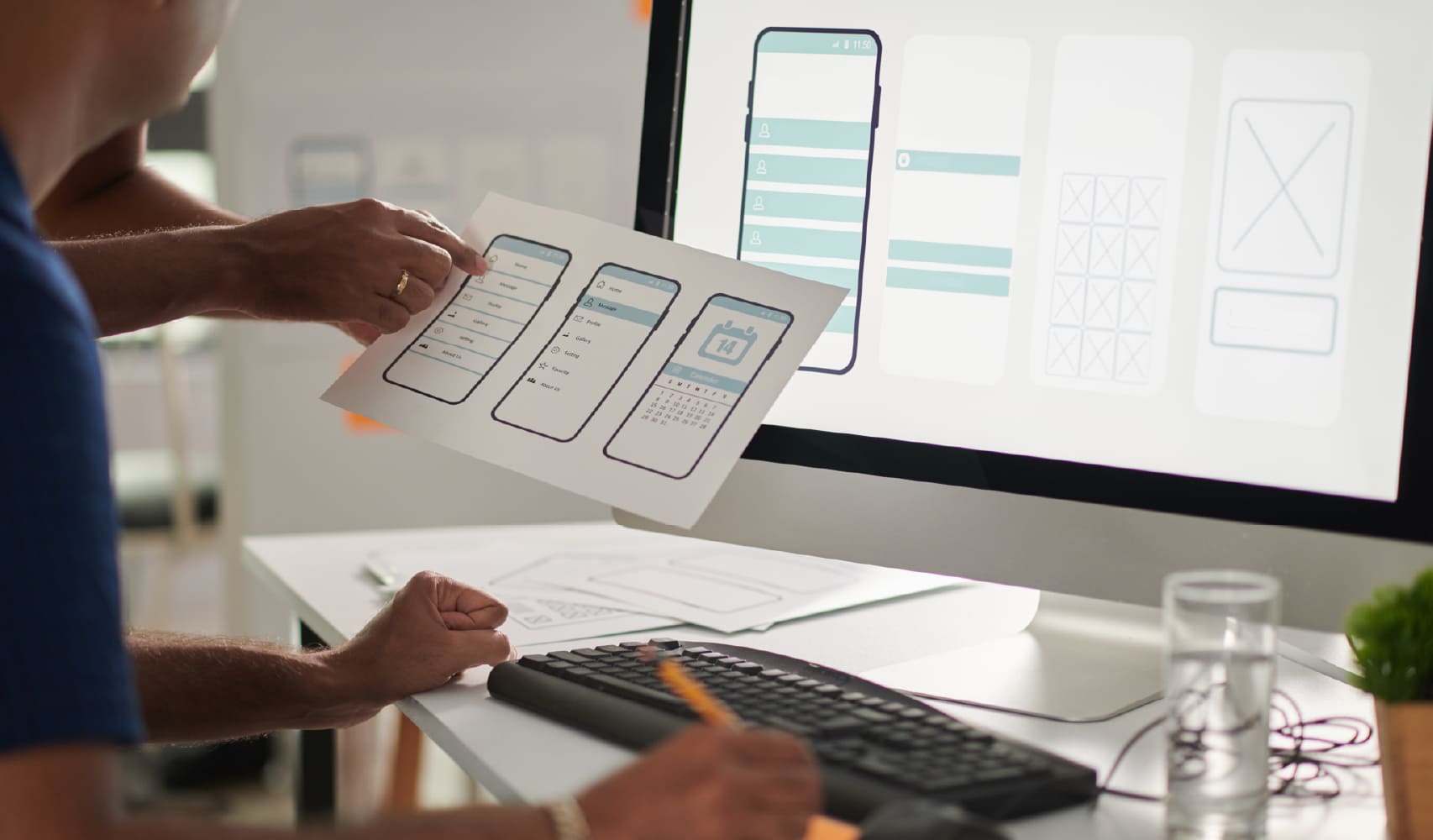
We design screens and interaction patterns specifically for Apple devices and align them with Apple's Human Interface Guidelines. The goal is to create an experience that feels natural on iPhone and iPad while taking into account the conventions and interaction patterns of the Apple platform.

We integrate iOS applications with existing backends, internal systems, third-party APIs, and other services so the mobile product works as part of the client's wider application and data ecosystem.

Testing can cover functionality, performance, compatibility, and stability across the iPhone and iPad models and supported iOS versions relevant to the project's target user base.

We can prepare App Store submission materials, required metadata, privacy information, and other assets needed for publication. Support can also include updates required in response to App Store review feedback when this is part of the agreed project scope.
Problem & Approach
The problem
Companies evaluating an iOS development company may be dealing with several issues at once: limited access to engineers with production iOS experience, an application architecture that no longer supports product growth, and unclear boundaries between mobile functionality and backend responsibilities. Together, these issues can increase development effort, introduce technical debt, and make otherwise small product changes harder to deliver.
Solbeg’s approach
Before development begins, we review what already exists, whether that is a live codebase, technical documentation, or a product requirements set. We then define an architecture appropriate for the product’s expected complexity, lifecycle, integrations, and growth. Reviews and testing can take place throughout development so technical and product issues are identified earlier in the delivery lifecycle.
Use Cases
A new product needs an iPhone version before launch, while the company does not have the time or resources to build an internal iOS team from scratch.
An app released years ago is still in use, but updates to iOS, frameworks, or dependencies increasingly create compatibility issues and slow down development.
A product that already exists on web or Android needs an iPhone counterpart that connects to the same backend, services, and data sources instead of operating as a separate system.
An internal team is approaching a release or major development milestone and needs additional iOS engineers for a defined period without adding permanent headcount. This is one reason companies may work with an iOS app development agency instead of hiring a permanent internal team.
An application preparing for App Store submission or resubmission needs technical, metadata, privacy, or data-handling issues addressed before review.
Scope of work
iOS engineering
iOS engineers develop and maintain the application code, including integration with backend services, internal systems, and third-party SDKs the product depends on. This forms the core of many iPhone app development services engagements.
UI/UX design
Designers create interfaces and user flows specifically for iPhone and iPad, taking Apple platform conventions, device layouts, interaction patterns, and accessibility requirements into account.
Quality assurance
QA engineers can test the application across relevant physical devices, simulators, and supported OS versions according to the project’s test matrix. Testing can cover functionality, compatibility, stability, performance, and integration scenarios.
Backend integration
Backend engineers can adjust or develop the APIs and services the iOS application requires when this work is included in the project scope rather than assumed to already exist.
Delivery management
Delivery or project management can coordinate scope, timelines, dependencies, reporting, and communication across the engineering, design, QA, and client teams.
Why Solbeg
Why Companies Choose Solbeg for iOS
Solbeg combines native iOS expertise with broader mobile, backend, QA, design, and delivery capabilities to support both new applications and products already in use. Our teams can work across the full delivery lifecycle while adapting the engagement to the product’s architecture, roadmap, and existing technology environment.
Native iOS expertise in-house
Solbeg works with native Apple technologies and provides iOS engineering expertise for building, maintaining, and modernizing production applications. This allows clients to address platform-specific functionality, integrations, performance, and long-term maintainability within the same technology partnership.
Full delivery scope within one team
iOS engineering, UI/UX design, backend development, QA, system integration, and delivery management can all be included in the same engagement. This helps reduce coordination and handover gaps between design, implementation, testing, backend dependencies, and release preparation.
Experience with existing applications
Solbeg can take over projects that already have active users, established codebases, integrations, and business logic. Our teams can review the current architecture and dependencies, identify technical constraints, and define a practical path for modernization or further development without assuming that the application needs to be rebuilt from scratch.
Integration with the wider technology environment
iOS applications rarely operate in isolation. We integrate mobile products with existing backends, internal systems, third-party APIs, and services so they work effectively within the client’s broader application and data ecosystem.
QA across devices and OS versions
Dedicated QA specialists can test functionality, compatibility, performance, stability, and integrations across relevant devices and supported iOS versions. Testing can be incorporated throughout development to identify platform-specific issues earlier in the delivery lifecycle and reduce risks before production release.
Support beyond the initial release
Solbeg can continue supporting an application after launch through maintenance, modernization, technical updates, new feature development, and release support. This provides continuity for products expected to evolve as business requirements, Apple technologies, and user expectations change.
Comparison
Native vs. Cross-Platform iOS Development
There are two common approaches to building an iPhone application. The appropriate choice depends on the product’s functionality, performance requirements, platform roadmap, and long-term maintenance needs.
Native development
Native development provides direct access to Apple frameworks, APIs, and device capabilities. This can be particularly valuable for products that depend on platform-specific functionality, advanced interactions, demanding performance requirements, or deep integration with Apple technologies.
For teams looking for a native iOS app development company, this approach also means maintaining a dedicated iOS codebase when the same product is available on Android. The trade-off is additional platform-specific development and maintenance effort.
Cross-platform frameworks
A shared codebase across iOS and Android can reduce duplication and simplify development when both platforms are required and the product does not depend heavily on low-level platform-specific features.
The trade-off is an additional framework layer, which can require extra engineering effort when the application depends on newly introduced Apple capabilities, specialized hardware access, or other platform-specific APIs.
Process
How We Approach iOS App Development
-
Discovery
We review the product requirements and, where relevant, the current codebase, architecture, integrations, and technical dependencies to understand what already exists and what still needs to be defined before implementation.
-
Team formation
We assemble the iOS engineers, designers, QA specialists, backend engineers, and delivery roles required by the agreed scope rather than assigning the same fixed team structure to every project.
-
Onboarding
Access to repositories, project management tools, communication channels, environments, and documentation is established. The team also agrees with the client on workflows, reporting cadence, responsibilities, and collaboration processes.
-
Development and delivery
Development can proceed incrementally, with testing, reviews, and demonstrations incorporated into the delivery process. Release planning is aligned with the agreed roadmap, product priorities, dependencies, and target milestones.
FAQ
iOS Development FAQ
We work with both. When joining an existing project, the first step can include reviewing the current architecture, dependencies, frameworks, and integrations to identify compatibility issues, technical constraints, and areas that may need modernization before new functionality is added.
Yes. iPad support can be included in the project scope, with layouts, interactions, navigation, and supported functionality adapted to the target device experience. The extent of iPad support is defined during discovery according to product requirements.
Yes. App Store publishing is part of Solbeg’s mobile development capabilities and can be included in the project scope for an iOS app development firm engagement. Work can include preparing required metadata, privacy information, submission materials, and technical updates needed in response to review feedback.
The app can connect to existing systems when suitable APIs or integration mechanisms are available. If backend changes or new services are required, this work can be included in the project scope and defined during discovery rather than assumed in advance.
The timeline depends on the scope, application complexity, integrations, platform requirements, existing codebase, and whether the project involves a new application or an extension of an existing product. When evaluating an iPhone development company, clients should expect a project-specific estimate based on discovery rather than a fixed industry-wide timeline.