
Hospitality
25+
Сompleted projects
2000+
USERS
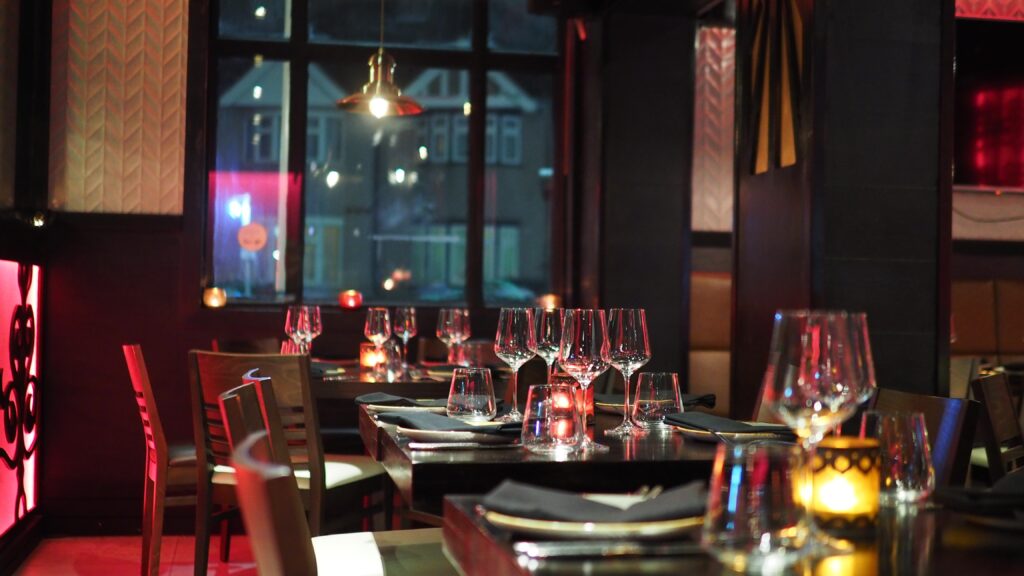
Solutions for hospitality industry
Solbeg builds hospitality software for restaurant operators and their guests. The areas below cover operational workflows such as inventory, purchasing, table service, payments, guest-facing services, and back-office administration.
Supply level monitoring and inventory management
Manual stock counts and spreadsheet records can make it difficult to understand how much product is available and how quickly it is being consumed. Inventory management software can track deliveries, write-offs, stock movement, and consumption data to help restaurant teams monitor supply levels and identify shortages or excess stock. An important technical consideration can be mapping ingredients and stock units to menu items, especially when recipes use several products in different units of measure.
Purchasing and utility bill automation
Recurring purchasing and operating expenses can require significant administrative effort when handled manually. Hospitality management software can support recurring purchasing workflows, approval processes, supplier records, and administrative tasks related to operating expenses. Depending on the project, this can also include workflows for tracking and processing recurring utility-related expenses, with audit trails and manual controls where required.
Table management
Seating, reservations, and table turnover can be difficult to coordinate during peak hours when information is spread across manual tools or disconnected systems. Table management applications can give hosts and managers an up-to-date view of occupancy, reservation status, and service stage. The data model can reflect the venue’s actual floor layout, seating rules, reservation processes, and service workflow rather than relying on a fixed template.
Order taking and payment at the guest seat
Moving repeatedly between the dining area and stationary terminals can slow order processing and create additional opportunities for data entry errors. Mobile order taking and payment processing at the guest seat can reduce the need for these extra steps. This category of software for the hospitality industry may need to account for connectivity conditions inside the venue, including offline behavior and later synchronization where required. Applications for handheld devices used by service staff are delivered through our mobile application development services, with offline handling and device constraints considered at the architecture stage.
Back office and bookkeeping
Bookkeeping in a hospitality business may draw on sales, purchasing, payroll-related, utility, and other operating data. Hospitality operations software can consolidate or exchange these records to support accounting and bookkeeping workflows. Reconciliation rules can also be defined to help reduce inconsistencies between operational and accounting records over time.
Guest facing applications
Guest-facing applications can allow customers to view menus, place orders, make payments, or access other digital services from their own devices. These applications can be integrated with operator systems so menu, pricing, and availability data remain consistent across channels. Release planning can also take into account app store review cycles and users who continue to use older application versions.
Internet cafe software
Cyber cafe operators may need to manage session time, seat availability, billing, and food or beverage service within the same operating environment. These workflows can be combined within a hospitality management platform to reduce the need for staff to work across disconnected tools during a shift. Important considerations include access control, session tracking, and billing accuracy.
Multi location and chain operations
Hospitality chains need to manage locations that may differ in menu, staffing, service model, and configuration while still maintaining shared business rules. A hospitality operations platform designed for multiple venues can support central configuration, location-level settings, and role-based access so users see and manage only the information relevant to their responsibilities. Considering multi-location requirements early can reduce the amount of architectural rework needed if the platform later expands across additional venues.
Why Solbeg
Why Companies Choose Solbeg for Hospitality Software
Solbeg combines hospitality industry experience with full-cycle engineering expertise to build, modernize, and support software for complex operational environments. Our teams work across guest-facing applications, back-office systems, process automation, system integration, and ongoing support to help hospitality businesses connect digital services with day-to-day operations.
Process automation experience in HoReCa
Solbeg works on process automation across several industries, including HoReCa. This domain experience can make requirements discussions more focused on the client’s specific operating model, workflows, and integration needs rather than on a generic feature list.
Coverage of both operator and consumer sides
Solbeg delivers restaurant-related software for both operators and guests. Projects that involve both operator and guest-facing applications can be designed around shared business rules and consistent data exchange between the two sides. This is particularly relevant for hospitality IT solutions where guest applications and back-office systems rely on the same menu, pricing, availability, or order information.
Delivery record in the industry
The company reports more than 25 completed projects and more than 2,000 users in this industry segment. This track record provides practical context for discussing restaurant and hospitality workflows, integrations, operational requirements, and user scenarios.
Full delivery scope in one company
Solbeg’s service portfolio includes IT advisory, software and mobile development, cloud development, testing and QA, and maintenance and support. Hospitality software development services delivered through one technology provider can reduce coordination and handover gaps between analysis, implementation, testing, deployment, and ongoing support.
Options for systems that already exist
Legacy system modernization is available as a separate service line, so existing hospitality applications can be modernized incrementally where a full replacement is not appropriate. This can be particularly relevant when venues need to maintain day-to-day operations while parts of a system are upgraded, re-engineered, or replaced.
Distributed delivery locations
Solbeg has offices in the USA, Poland, India, and Uruguay. For IT solutions for the hospitality industry, this international presence provides flexibility when planning communication, release coordination, project reviews, and support across different time zones.
Continuity of operations
Solbeg has long-term experience delivering and supporting business-critical software products. For hospitality industry solutions expected to remain in use for years, access to ongoing maintenance, modernization, and further development can be an important consideration when selecting a technology partner.
Process
How We Approach Hospitality Software Projects
The sequence below describes a typical path from an operational challenge to a software solution used in day-to-day hospitality operations. The exact structure and depth of each stage can vary depending on project scope, existing systems, and business requirements.
-
Discovery and requirements
Work can begin with a review of current operations, business workflows, user roles, and the systems already in place. The result can be a documented scope describing which processes the software should support and what data needs to be exchanged with existing tools. IT advisory is available as a separate service line, so analysis and assessment can also be delivered independently before a larger development engagement.
-
Solution design and planning
The team can define the data model, integration points, user roles, platform requirements, and release approach according to the project needs. Decisions made at this stage influence how hospitality management systems handle peak usage, integrations, scalability, and later changes to menus, pricing, configuration, or operational workflows.
-
Development
Development can proceed incrementally, with functionality delivered for review as the solution evolves. Web, mobile, guest-facing, and back-office components can be coordinated around shared APIs, business rules, and data structures where appropriate, helping a hospitality platform and its connected applications remain consistent as functionality changes.
-
Testing and QA
Testing and QA are part of Solbeg’s service portfolio. Test coverage can focus on order, payment, booking, reporting, integration, and other critical workflows, because issues in these areas can directly affect guest experience, operations, and financial records. Testing can also include scenarios where connectivity or a third-party service is temporarily unavailable.
-
Release and rollout
Rollout in an operating venue can be planned around service hours and operational constraints to reduce disruption. This stage can include migration of menus, price lists, configuration, and historical records where required, together with validation steps and fallback or rollback procedures appropriate to the project.
-
Maintenance and further development
After release, Solbeg can provide maintenance, support, monitoring, defect resolution, and further product development. Changes driven by new processes, suppliers, integrations, or business requirements can follow an agreed process for scoping, implementation, testing, and release.
FAQ
Hospitality Software Development FAQ
We develop hospitality industry software for venue operations and guest-facing use cases. Our experience includes supply level monitoring, inventory management, purchasing and operating expense workflows, table management, order taking and payment at the guest seat, Internet cafe software, and consumer-facing applications. Both operator-side systems and guest-facing products can be included depending on project requirements.
Both. Legacy system modernization and maintenance and support are available as separate service lines, so existing software for hospitality operations can be extended, modernized incrementally, integrated with new components, or supported in its current form. The appropriate approach depends on the condition of the existing codebase, current integrations, operational requirements, and the amount of functionality that needs to remain unchanged.
Yes. Mobile development is one of Solbeg’s service lines, and delivery can cover the consumer side of hospitality solutions as well as operator-facing tools. A guest application can be integrated with operator systems so menu, pricing, availability, order, and other relevant data remain consistent across channels.
Integration planning can begin with a review of the systems that hold sales, purchasing, accounting, booking, or other operational data. The integration scope can then define the data exchanged, direction of flow, synchronization behavior, access requirements, and error handling for each connected system.
Yes. Multi-location support can be incorporated into the architecture from the start when it is part of the business requirements. A hospitality management solution used by a chain can include shared configuration, location-level settings, user roles, and access rules that control what each manager or employee can view and change. Adding multi-location capabilities later may require changes to the data model, permissions, configuration, and reporting logic.
Maintenance and support are available as separate services. Work after release can include defect resolution, monitoring, performance improvements, integration changes, modernization, and further development as business processes evolve.
It depends on how closely your processes match the assumptions built into packaged products. Off-the-shelf hospitality management software systems can cover common scenarios with a lower initial investment, but customization is generally limited to the capabilities provided by the platform. Custom development may require a higher initial investment but can be more appropriate when specific workflows, integrations, scalability requirements, or data ownership needs cannot be met by standard products.