
Web3: redefining security and transparency in financial services
The transition from Web2 to Web3 marks the beginning of a new era in financial services, opening the door to unprecedented opportunities, improved security, and increased transparency.
The financial sector stands on the brink of transformation with the advent of Web3 technologies. Often referred to as the next generation of the internet, Web3 utilizes blockchain technologies, decentralized networks, and smart contracts to create a more transparent, secure, and efficient financial ecosystem. In this article, we will explore what Web3 means for financial services, its potential benefits, challenges, and real-world applications, supported by data and expert opinions.
Understanding Web3
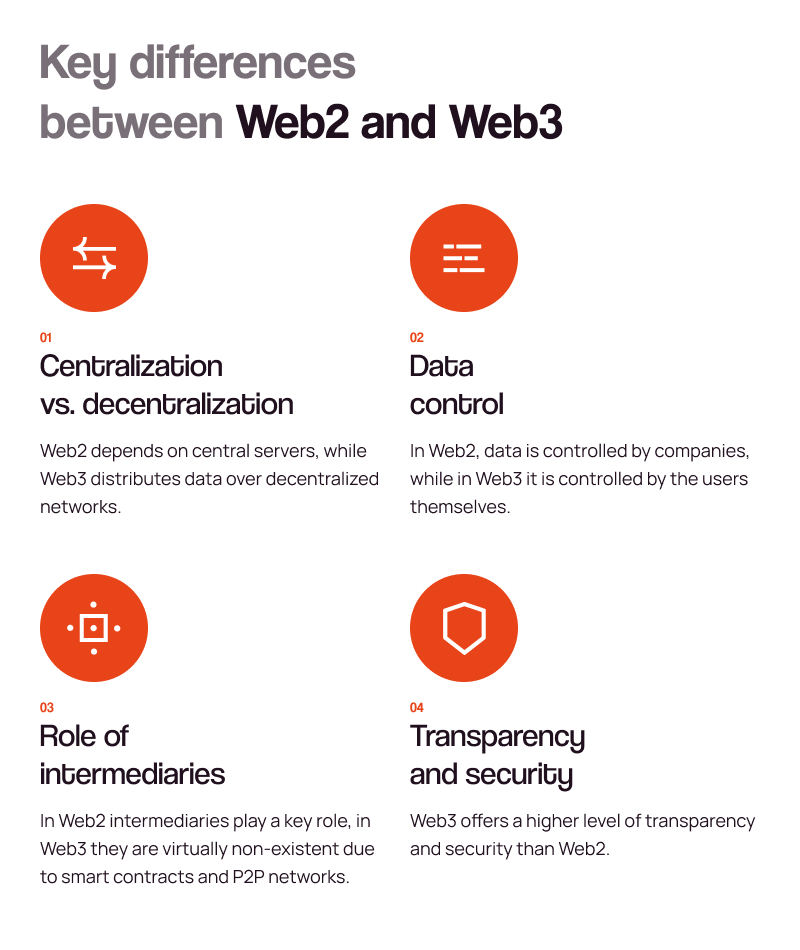
Web2, the current version of the internet, is characterized by centralized platforms managed by large tech companies. Users provide their data to these companies in exchange for services, making them vulnerable to data breaches and manipulation. Many online transactions require intermediaries, increasing costs, and slowing processes. Centralized servers are prime targets for hackers, making systems less secure.
In contrast, Web3 is based on decentralization and user control over data. Data and services are distributed across decentralized networks, primarily built on blockchain, eliminating the need for central authorities. Users have full control over their data and can choose whom to share it with and how. All transactions and interactions are recorded on the blockchain, creating a transparent and immutable record. Smart contracts automatically execute agreement terms without the need to trust third parties, and decentralized systems are less vulnerable to hacks since there is no single point of failure.
Thus, Web3 offers a higher level of transparency, security, and data control compared to Web2, opening new possibilities for financial services.
The impact of Web3 on financial services
Web3 is revolutionizing financial services by providing more transparent, efficient, and secure ways to manage finances. Blockchain technologies enable faster transactions, reduced costs, and the elimination of human error. Smart contracts automate and ensure the execution of financial operations without the need to trust third parties.
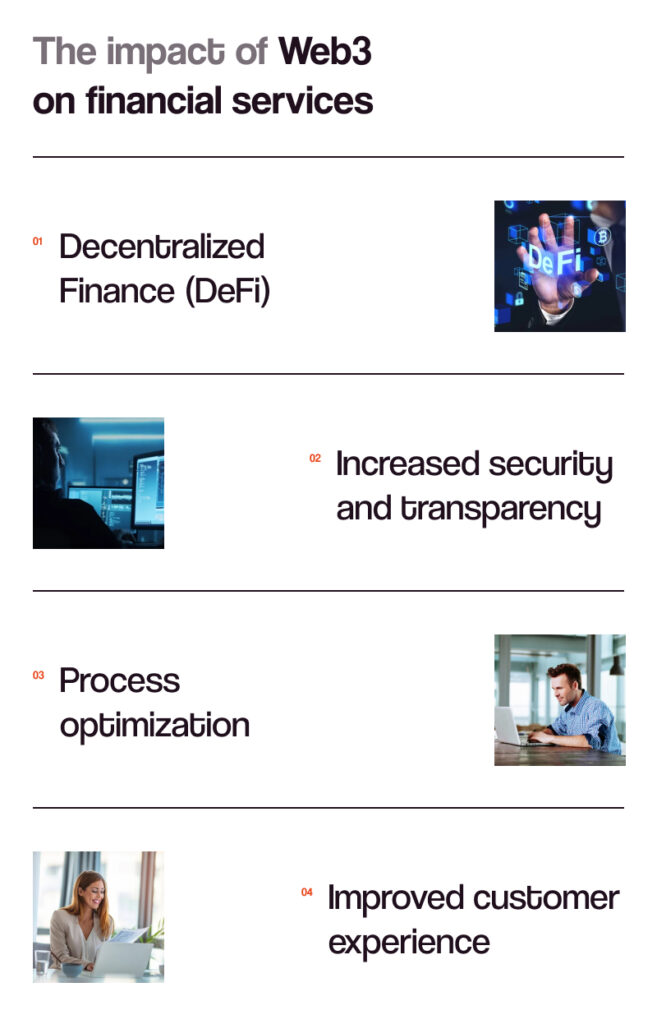
1. Decentralized Finance (DeFi)
DeFi is one of the most transformative aspects of Web3 in financial services. This new financial ecosystem is built on blockchain networks, where financial products are available on a decentralized and permissionless basis. According to ConsenSys, the total value locked (TVL) in DeFi protocols grew from $1 billion in June 2020 to over $100 billion by May 2022. This rapid growth highlights significant interest and investment in DeFi platforms.
2. Increased security and transparency
Blockchain technology ensures a high level of security through its decentralized nature and cryptographic algorithms. According to a Deloitte study, 68% of executives believe that blockchain technology will improve security and fraud prevention. This is especially crucial in financial services, where the integrity and security of transactions are paramount.
3. Process optimization
Web3 can significantly optimize various financial processes. For example, international payments, which typically involve numerous intermediaries and can take several days, can be processed almost instantly using blockchain. Boston Consulting Group estimates that blockchain-based international payment systems can reduce transaction costs by up to 80%.
4. Improved customer experience
Web3 technologies give users more control over their financial data and assets. Decentralized identifiers and wallets allow users to manage their information and conduct transactions without third-party involvement. This autonomy leads to a more personalized and seamless customer experience, meeting the growing demand for digital financial services.
Challenges and Considerations
Despite significant advantages, Web3 faces several challenges. Key issues include scalability, regulatory uncertainty, and security concerns, alongside the challenge of awareness and adoption of new technologies among users and organizations…
Continue reading the article on Medium.